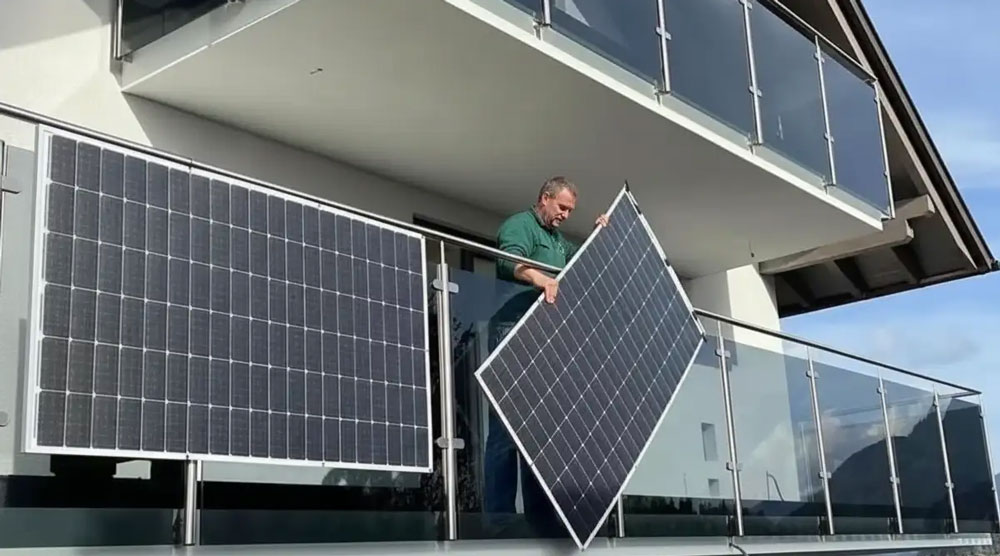
Plug in solar (sometimes called “plug-and-play solar” or “balcony solar”) is a small-scale solar system that connects directly to a standard household socket. Instead of a full rooftop installation, it typically includes:
- 1–2 solar panels (usually up to ~800W)
- A microinverter
- A cable that plugs into a regular socket in your home
Once connected, the system feeds electricity straight into your home, reducing how much you draw from the grid during the day.
How does plug in solar work?
Plug in solar works by generating electricity from sunlight in DC and converts it into usable AC power via a microinverter. That power is then used instantly by appliances in your home, thereby reducing your electricity bill automatically. There’s no need for complex rewiring — your home simply uses the solar energy first before pulling from the grid.
Is plug in solar legal in the UK?
As of April 2026, plug in kits are not yet fully permitted under existing UK wiring rules, but that is about to change. The UK government has confirmed plans to enable plug-in systems by updating regulations. Specifically:
- The government is working with the Energy Networks Association, DNOs and Ofgem to update the G98 distribution code and wiring regulations BS 7671
- This will allow UK households to connect <800W plug-in solar panels directly to domestic mains sockets
- Systems will not require an electrician
- New tailored safety standards will be introduced
In addition:
- BS 7671 Amendment 4 (2026) to the 18th Edition Wiring Regulations is scheduled for publication on 15 April 2026
- Often referred to as the “Orange Book,” it includes updates on:
- battery storage
- ICT earthing
- Power over Ethernet (PoE)
- There will be a six-month transition period, with the previous version withdrawn on 15 October 2026
In practical terms, this means plug in systems should become widely available in the UK during 2026 with broader adoption following shortly after. Fill in the form below to be kept updated.
How much can plug in solar save you?
A typical plug in system of 800W should save a typical household around £80–£150 per year on electricity bills, depending on usage patterns, energy prices and how well the panels are oriented towards the sun. Because the systems will be relatively low-cost, if you’re paying £0.26/kWh, systems could pay back in 5-8 years making plug in solar very attractive to suitable homes in the UK.
Will you need an electrician?
No. When the regulations are updated (see below) an electrician will not be required for compliant plug-in systems under 800W. Systems will be designed for safe, DIY installation
Is plug in solar worth it in the UK?
For many households — especially renters or those without suitable roofs — plug in solar offers a low-cost entry into solar energy, a non-permanent installation (so you can take it with you if you move home), immediate bill savings – and a payback period of 5-8 years. Panels will continue to generate energy for at least 20 years providing significant savings over their lifetime.
Under Renters’ Rights Act 2025, tenants can request energy improvements and landlords cannot refuse unreasonably, so plug in solar should be suitable for people that live in rented properties. As regulations update and awareness grows, plug in solar is expected to become one of the simplest and fastest-growing ways to adopt solar energy in the UK because of the attractive savings.
When will the plug in kits be available in the UK?
With regulatory updates landing in April 2026 and transitioning through October 2026, plug in solar is expected to be available in mid or late 2026. Fill in the form below to be kept updated.
What is the best orientation for the solar panels?
Orientation has a big impact on how much electricity your plug in solar system generates.
- South-facing is ideal in the UK for maximum output
- East or west-facing can still work well, especially if your usage is morning or evening-heavy
- North-facing is generally not recommended
For balcony setups, perfect positioning isn’t always possible — but even suboptimal angles can still deliver meaningful savings. A slight tilt (around 20–40°) and avoiding shade are often more important than exact direction.
What fixtures and fittings do you need for plug in solar kits?
Most plug in kits will come with the core components, but mounting and setup hardware can vary depending on where you install them. Typical kits will include solar panels, a microinverter and a plug-in cable. Additional fixtures you may need:
- Balcony rail mounts
- Wall brackets
- Ground frames (for gardens or patios)
The key is stability and safety — panels must be securely fixed and able to withstand wind, especially in exposed locations like balconies.
Can you combine plug in solar with batteries?
Yes — and this is where things get more interesting. A battery allows you to store excess daytime energy and use it later in the evening or at night, which can increase your overall savings. However, basic plug in systems do not include batteries by default and adding storage increases cost significantly
There are now emerging “plug-and-play” battery systems that integrate directly with solar kits and energy monitors, making this much simpler than traditional solar + storage setups. For many users, starting without a battery and adding one later is the most cost-effective approach.
Plug in solar represents a major shift in how people access solar energy — moving from complex installations to simple, affordable systems that almost anyone can use. As UK regulations catch up with Europe, it’s likely to become a mainstream home energy solution in the very near future.
Be first to know when the UK regulations are published
Fill in the form below to be updated as soon as the plug in solar regulations for the UK are published.
Check out the video below for more details from our friend at Speak to the Geek